Kinatico

COMPLIANCE MANAGEMENT

Kinatico Compliance Re-verification Reminders

Decide how often each verification should be re-run, whether that’s every year, every two years or whatever your policy requires, and we’ll let you know when one is due.

Re-run verifications on your own schedule

Many verifications don’t have an expiry date. A National Police Check, Credit Default screen or Driving Traffic verification for example describes the person on the day it was completed, so organisations choose how often to re-run them based on their own policy, sector and appetite for risk. 

Re-verification Reminders let you set that schedule for each verification, and keep it separate from monitoring, which watches for changes to credentials in between. 

Automatic reminders, on your schedule 

You choose how often each verification should be re-run, whether that’s every year , every two years, or something else. Kinatico keeps track of when each one is next due for every worker and reminds you when it comes around. 

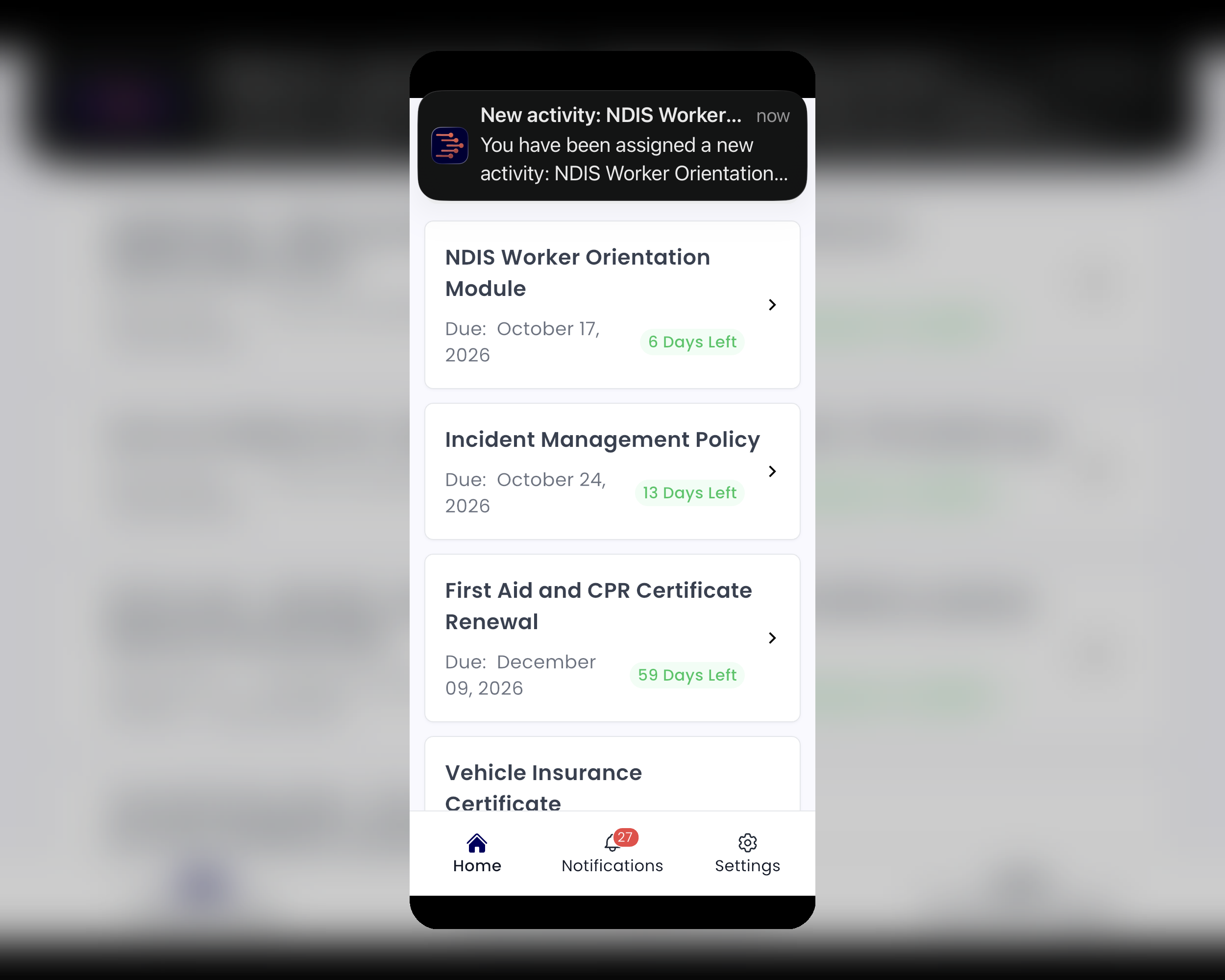
Workers are reminded before the due date and alerted if it's still outstanding afterwards. You can also set different schedules for different roles, so the same verification can be re-run more often for frontline roles than for office roles. 

Kinatico compliance app requirement list

How reminders and monitoring work together

Placeholder

Re-verification Reminders run on the schedule you set. Monitoring verifies certain credentials every month and alerts you if something changes before your next scheduled re-run, so a clearance revoked in March is flagged well before an annual review in November. 

On the Core and Premium plans, working rights are monitored every month. The Premium plan includes a full suite of verifications that are monitored monthly. Everything else runs on the schedule you set.

What runs on a schedule 

Frequently asked questions 

  • Partly. Some credentials expire, and their renewal follows the credential. Many verifications don’t expire at all, and organisations re-run them according to their own policy. 

  • You do, for each requirement, based on your own policy. 

  • Re-verification Reminders tell you when a verification is due to be re-run on your schedule. Monitoring tells you if something changes before then. Most organisations use both. 

  • Both. Admins get reminded to issue a requirement. Once a requirement has been issued, Workers get reminders before the due date, followed by alerts if it’s still outstanding. 

  • Yes. A missed annual training refresh or an unacknowledged policy is handled the same way as a credential, with the same reminders and the same record. 

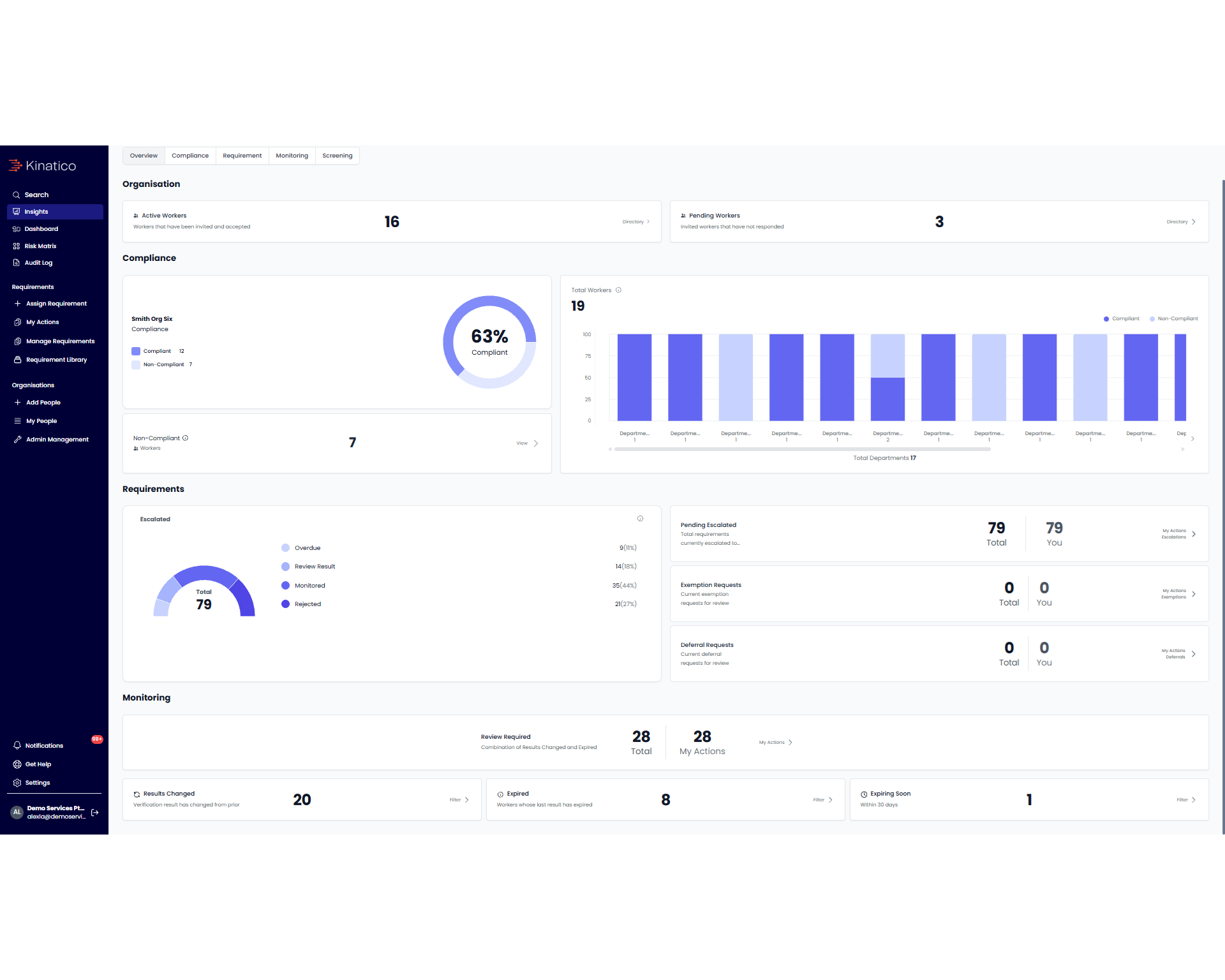
  • The requirement shows as outstanding and the worker’s status changes to non-compliant, so they appear in Insights for your team to follow up.